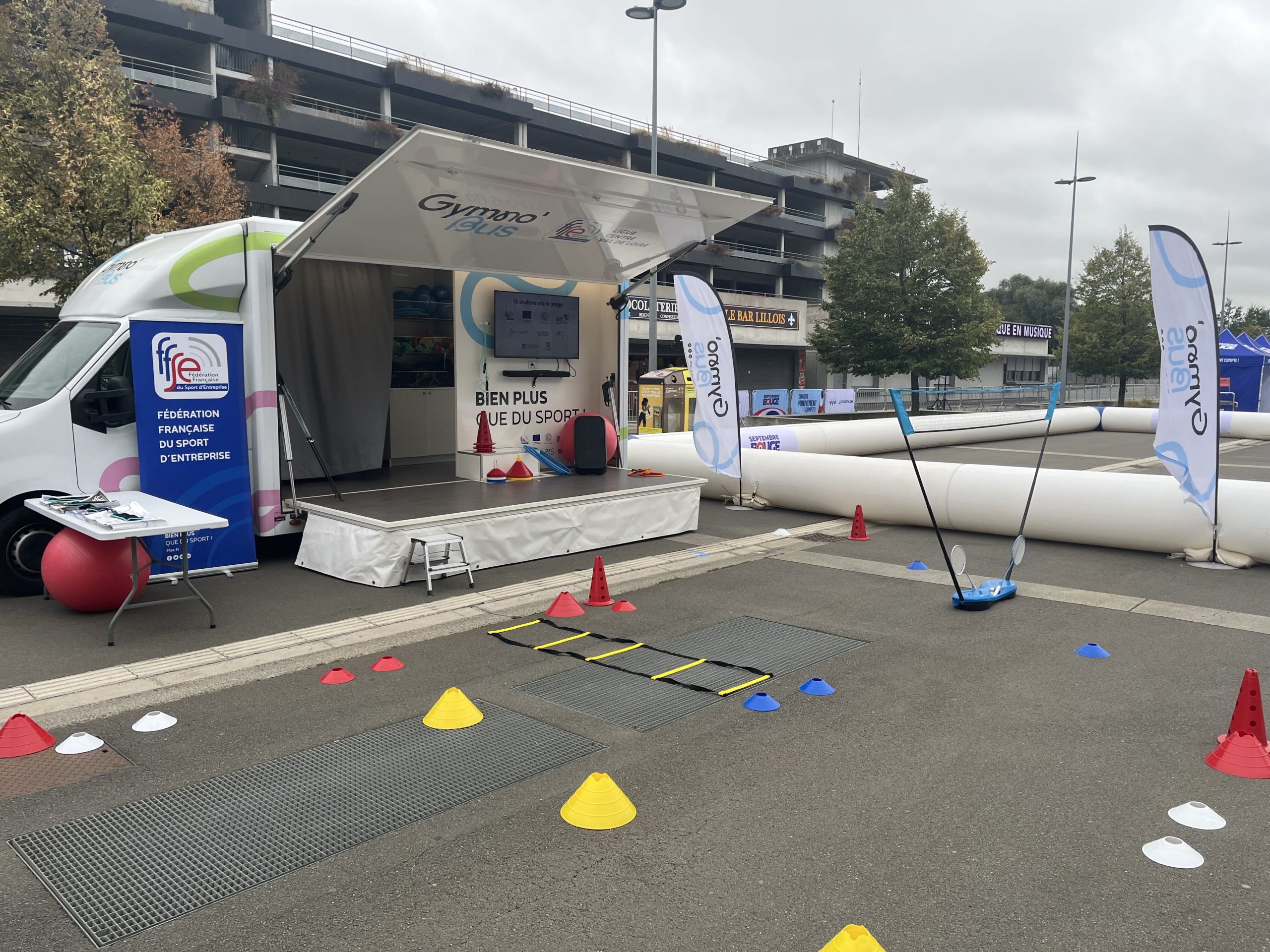
On the occasion of European Week of Sport, the European Commission invited the European Federation for Company Sport (EFCS) to deliver a dedicated intervention through its Gymnobus initiative, offering a full day of activities and leading active sessions for European Commission staff.
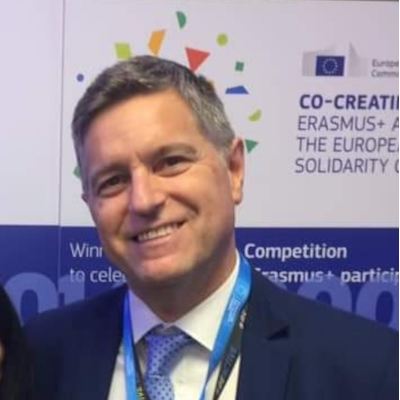
Luciano Di FONZO, Deputy Head of Unit at the European Education and Culture Executive Agency (EACEA), shares his experience and provides his testimonial.
This year, the Gymno’bus of the Centre-Val de Loire Regional League of the French Federation for Company Sport (FFSE) is coming to Brussels to get European Commission staff moving during the European Week of Sport. What does the presence of such an initiative at the heart of the European institutions mean to you?
For me, the presence of the Gymno’Bus at the heart of the European institutions sends a strong message: physical activity is not a secondary issue; it is an essential part of a healthy and sustainable working environment.
What I particularly value is that the Gymno’Bus turns a European policy objective into something concrete and accessible. It brings physical activity directly into people’s working environment and makes it easier for employees to be active during their working day.
It is also a good example of European cooperation in action: bringing together partners, sharing experience and demonstrating practical solutions that can be adapted in different workplaces and countries.
And there is an important symbolic dimension. Having such an initiative here in Brussels shows that the institutions are not only promoting healthier workplaces through policies and programmes, but are also creating opportunities to put these principles into practice.
For me, the Gymno’Bus is therefore a bridge between European policy and everyday action — bringing the message of a more active Europe directly to people.
For every €1 invested, between €3 and €6 can be saved: this is the estimated return on investment (ROI) of workplace physical activity programmes, particularly in organisations that regularly monitor their programmes and benefit from management support.
This is one of the key findings of the Work, Move & Perf study (Angosto-Sanchez, Evans, 2025), coordinated by the FFSE as part of a European project.
What is your view on this finding?
I think this is a very powerful finding because it changes the way we should look at workplace physical activity. It is not simply an employee benefit or a leisure activity; it can be a genuine investment in people, health and organisational performance.
At the same time, I would be careful not to present the €3–€6 figure as a guaranteed return for every organisation. The impact depends on how programmes are designed, how many employees participate, how long they are sustained and, importantly, whether there is strong management support and proper monitoring.
For me, one of the most important messages from the study is therefore that physical activity programmes need to be part of a long-term workplace strategy, not a one-off initiative.
What are currently the European Commission’s main priorities regarding the physical and mental health and well-being of workers?
I would summarise the European approach around prevention, safe and healthy workplaces, mental health, physical activity and adapting to the changing world of work.
Mental health and psychosocial risks are receiving increasing attention, alongside traditional occupational health and safety issues. At the same time, physical activity is recognised as an important part of prevention and healthy lifestyles.
Erasmus+ Sport also has an important role to play by supporting European cooperation, the exchange of good practices and projects that promote physical activity, inclusion and healthier lifestyles. It gives organisations the opportunity to develop and test practical solutions together and share them across Europe.
For me, the key message is that physical health, mental health and working conditions are closely connected. We therefore need a holistic approach in which prevention, physical activity and well-being become part of the culture of the workplace.
And this is where programmes such as Erasmus+ Sport can make a real contribution: they turn European priorities into cooperation and practical projects on the ground, while allowing successful experiences to be shared and replicated across Europe.
What role can company sport federations and their regional networks play in contributing to the implementation of European objectives on physical activity, health and well-being in the workplace?
I see company sport federations as bridges between European policy and everyday working life.
They can translate European objectives into practical opportunities for employees to be active, while bringing together employers, sports organisations, public authorities and local communities.
Their regional networks are particularly important because they understand local needs and can develop accessible and inclusive activities adapted to different workplaces and employees.
They can also help share good practices and demonstrate impact, showing what works and how successful initiatives can be developed further.
Ultimately, company sport federations can be implementers, connectors and ambassadors for a more active and healthier workplace culture across Europe.