Lausanne, Switzerland – 7 November 2026
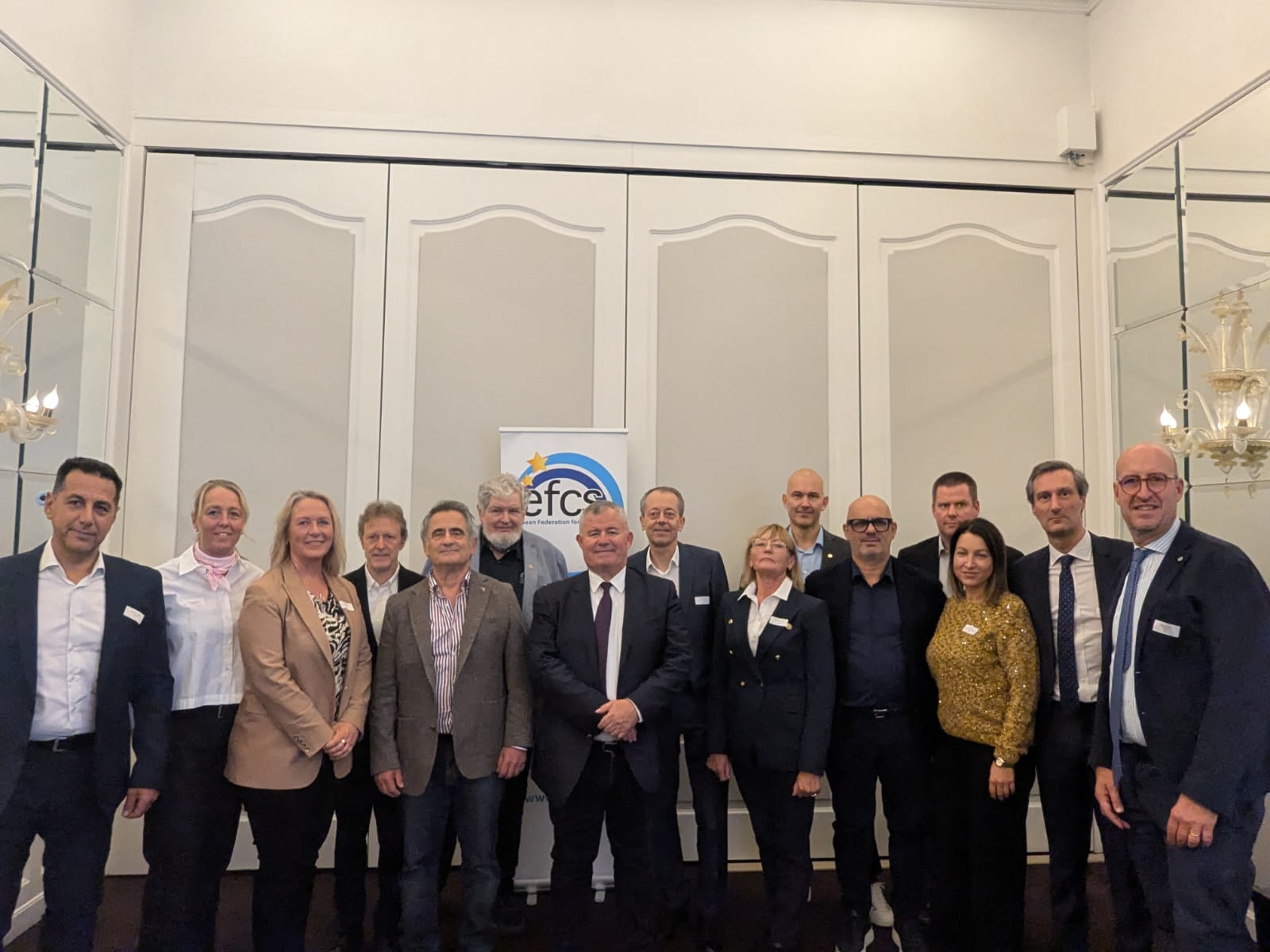
The European Federation for Company Sport (EFCS) held its General Assembly on 7 November 2026 in Lausanne, Switzerland, hosted by Swiss Active Workplaces. Bringing together representatives of member federations from across Europe, this key meeting marked an important milestone in the life of the federation, with the conclusion of the 2022–2026 mandate, the election of a new Executive Committee and the definition of priorities for the years ahead.
The Assembly provided an opportunity to review four years of collective achievements, take important decisions for the future of European Company Sport and reaffirm the EFCS’s commitment to promoting physical activity and sport in the workplace.
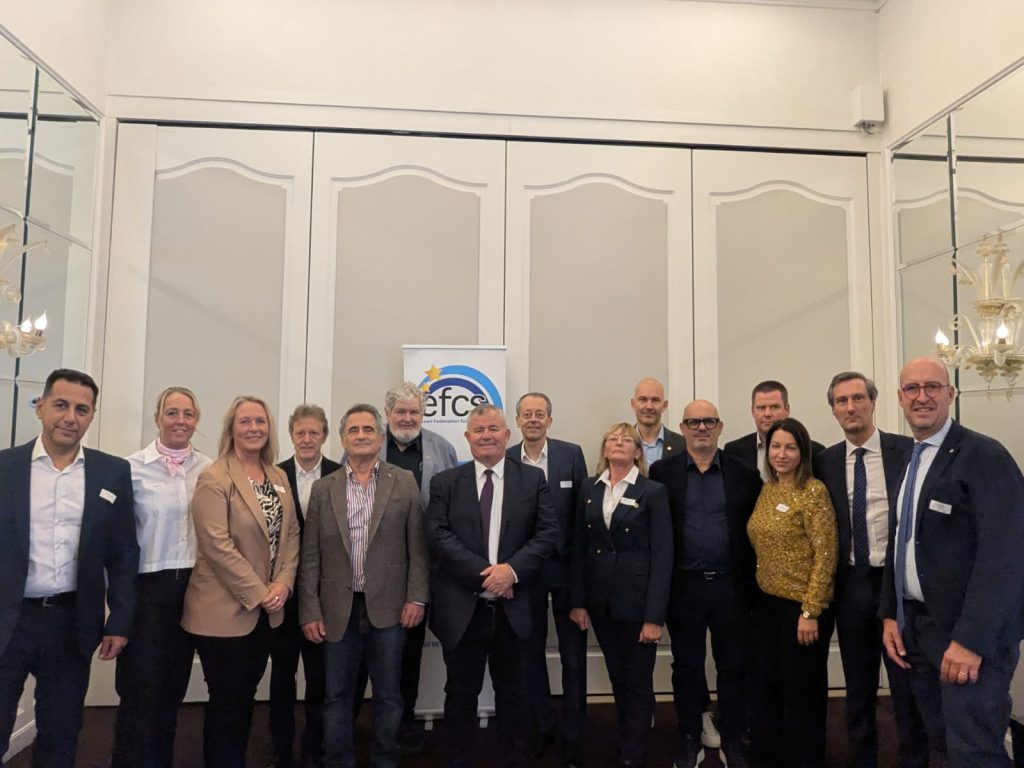
A new Executive Committee elected for 2026–2030
Didier Besseyre was unanimously re-elected as President of the EFCS, receiving the confidence of the member federations for a new four-year term.
The newly elected Executive Committee brings together representatives from across the European network:
- Didier BESSEYRE – President
- Musa LAMI – General Secretary
- Hugues CAMPAN – Treasurer
- Pernille AUDE (Denmark) – Vice-President
- Dirk VAN HAELTER (Belgium)
- Cosimo FORTUNA (Italy)
- Sverre FLATEBØ (Norway)
- Mirjana ĐERIĆ (Serbia)
- Galina GORBATENKOVA (Latvia) – Vice-President
- Spiros KARAVOULIS (Greece)
- Mark MARLOW (Malta) – Vice-President
- Reinhard SITZLER (Austria) – Vice-President
- Anna SUNDSTRÖM (Sweden)
- Uwe TRONNIER (Germany) – Vice-President
The positions of Deputy General Secretary and Deputy Treasurer will be filled at a later date.
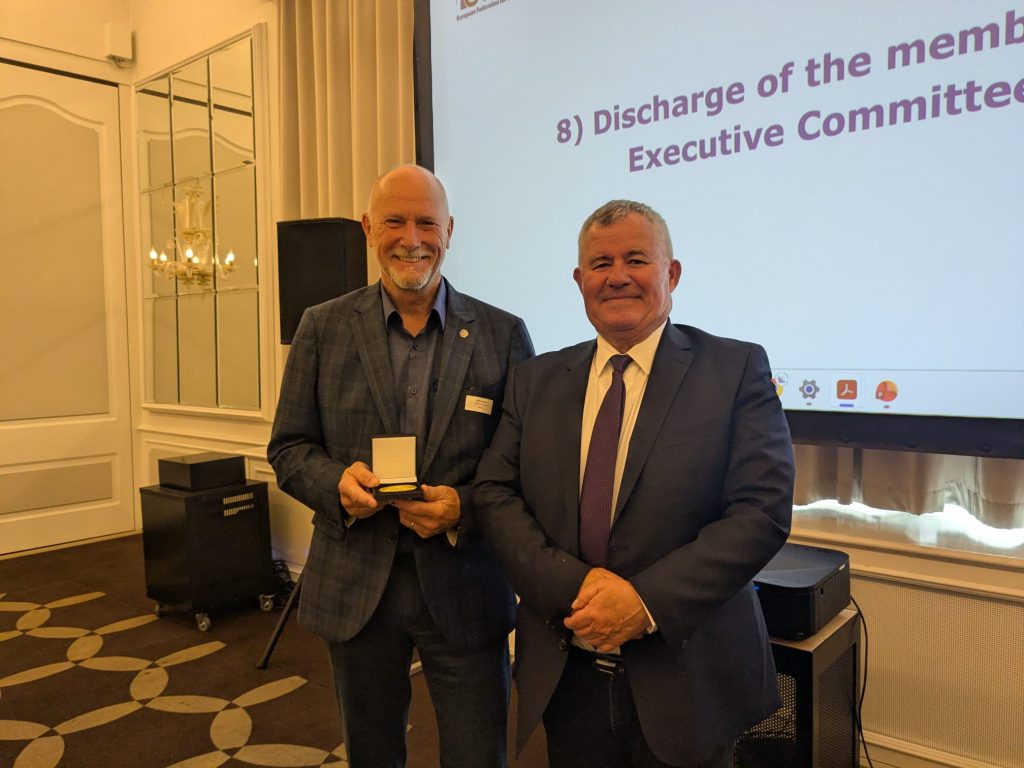
On this occasion, Peder Bisgaard, former EFCS Vice-President, was appointed Honorary Vice-President by Didier Besseyre in recognition of his longstanding commitment and valuable contribution to the development of Company Sport.
Looking back on four years of achievements: the 2022–2026 mandate
In his address to the General Assembly, Didier Besseyre presented an overview of the 2022–2026 mandate, highlighting the collective achievements and significant progress made by the federation over the past four years.
European Company Sport Games: a strong European tradition
The European Company Sport Games remain one of the historical foundations and key pillars of the EFCS.
The Summer Games in Bordeaux in 2023 and Calvià in 2025 were particularly successful, reaching record levels of participation and engagement. These editions demonstrated the continued appeal of the European Company Sport model and the importance of these major gatherings in bringing the federation’s network to life.
The Winter Games in Jahorina in 2024 also represented a successful edition. Didier Besseyre additionally acknowledged the considerable efforts made by the organisers of the 2026 Winter Games in Jaca, Spain, which unfortunately had to be cancelled, recognising their commitment and work despite this outcome.
Expanding European cooperation and diversifying activities
Over the past four years, the EFCS has significantly strengthened its involvement in European cooperation, notably through Erasmus+ Sport projects, both as a coordinator and as a partner.
As coordinator, the federation has led projects such as Active Workplaces Certification and Move at Work. It has also contributed to a range of European initiatives, including European Social Charter for Sport Events, Run for Diversity, Work Move & Perf, Bringing Sport to Your Workplaces (Gymnobus) and Promoting Active Cities Throughout Europe.
This momentum continues through ongoing projects such as European Workplaces: Be Active (EWBA) and Rethinking Environments for Active Students & Young Professionals (REACT).
These initiatives have enabled the EFCS to develop new expertise, strengthen partnerships between European organisations and diversify its activities beyond the organisation of sporting events.
The federation has also developed innovative digital approaches, particularly through E-Run for Diversity, which saw participation increase from 2,433 to more than 4,700 participants in 2025. The acquisition of a dedicated application now provides new opportunities to organise tailor-made digital challenges in collaboration with the WFCS and the FFSE.
Beyond the individual projects, these developments have generated important structural benefits for the EFCS:
- Promoting knowledge and physical activity in the workplace, through both sporting events and sport and health programmes.
- Encouraging the exchange of expertise and good practices between member federations and European partners.
- Diversifying activities and strengthening the economic model through new resources, partnerships and services.
- Consolidating the EFCS’s institutional position at European level, particularly through closer relations with the European Commission and its recent admission to the Consultative Committee of the Council of Europe’s Enlarged Partial Agreement on Sport (EPAS).
This latest recognition represents an important milestone, reinforcing the EFCS’s legitimacy and its capacity to contribute to European discussions and policies relating to sport, health and inclusion.
Riga selected to host the 2031 European Company Sport Games
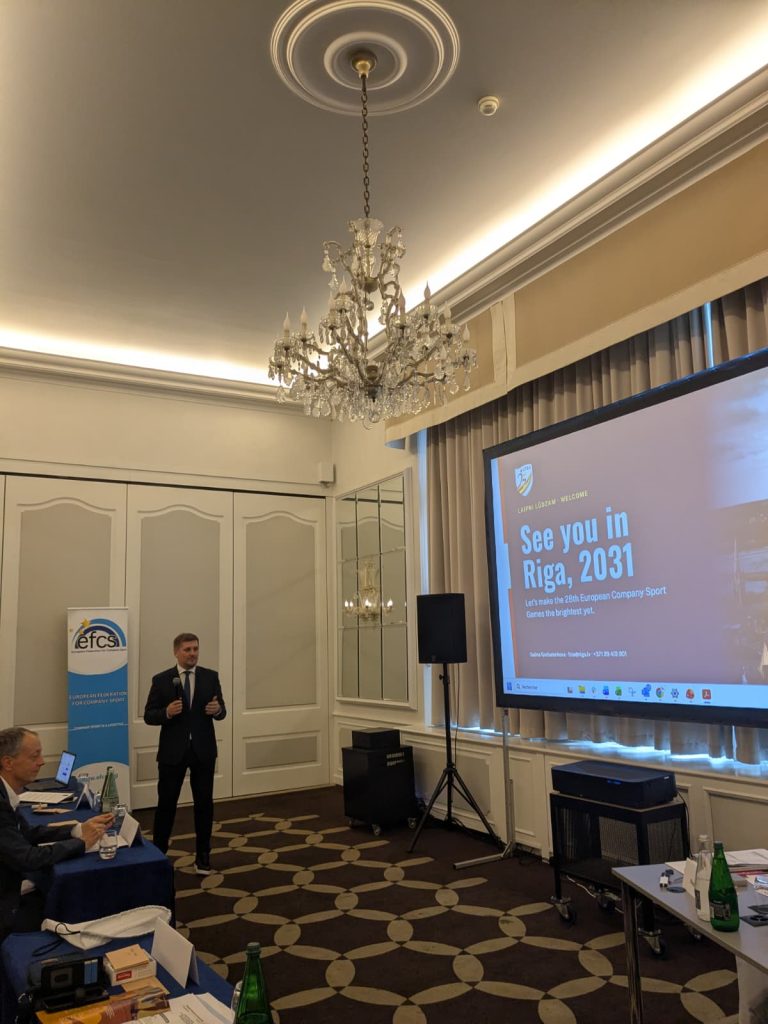
One of the key decisions of the General Assembly concerned the future host city of the 2031 European Company Sport Games.
Riga, Latvia, was unanimously selected to host the 2031 edition.
Vladimirs ŠTEINBERGS, President of the Latvian Council of Sports Federations (LSFP), and Galina GORBATENKOVA, Secretary General of LTSA, outlined the main highlights and what participants can expect.
The next editions of the European Company Sport Games are already on the horizon:
- Athens 2027 – 16–20 June
- Lille 2029
- Riga 2031
New mandate, new priorities: shaping the future of European Company Sport
Looking ahead, Didier Besseyre highlighted several key challenges and strategic priorities to guide the EFCS throughout the new mandate.
Strengthening and expanding the European network will remain a major priority, with a focus on welcoming new member countries, supporting the development of national structures and reinforcing the federation’s representativeness.
The EFCS will also need to evolve its model for major sporting events, ensuring that they continue to meet the expectations of participants and companies while adapting to broader developments, including climate change, the ecological transition and changing sporting practices.
Finally, strengthening the strategic and operational role of the EFCS Commissions will be essential. By drawing on their expertise, encouraging new initiatives and actively contributing to the implementation of projects, the Commissions will play a key role in shaping the federation’s future development.
Moving forward together
The 2026 General Assembly marked both the conclusion of an important chapter and the beginning of a new one for the EFCS.
The achievements of the past four years reflect the commitment and collective efforts of its member federations, partners, volunteers and governing bodies. Building on these foundations, the new Executive Committee will work to further professionalise the federation, strengthen its European network and adapt its activities to an evolving environment.
Together, the EFCS and its members will continue to promote Company Sport across Europe, making physical activity a driver of healthier, more inclusive and more active workplaces.
.